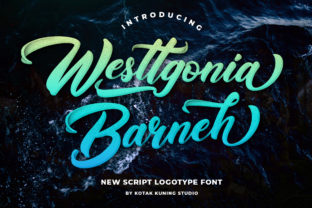
Westtgonia Barneh: A Handwritten Font for Brand Recognition
As a small business owner, I have learned that every detail matters when it comes to how customers perceive your brand. From the logo on your website to the label on your product packaging, consistency and personality make all the difference. That is why I was excited to discover Westtgonia Barneh, a stunning handwritten font that brings a powerful, expressive vibe to any project. If you are looking for a way to make your business materials stand out while staying true to your brand story, this typeface deserves a close look.
Westtgonia Barneh is not just another decorative font. It is a premium handwritten font with a bold, energetic character. The letterforms feel alive and confident, giving every word a sense of motion and attitude. Whether you run a boutique, a café, a handmade product shop, or a coaching practice, this font can instantly elevate your visual identity and help you connect with your audience on a more personal level.
What Makes Westtgonia Barneh Different from Ordinary Script Fonts
Many script fonts look elegant but feel stiff or overly formal. Westtgonia Barneh breaks that mold. It has a playful yet powerful stroke, with letters that flow naturally without losing readability. The handwritten quality brings authenticity to your brand, which is especially valuable for entrepreneurs who want to communicate a handmade, artisanal, or approachable image.
The font sits comfortably in the Script Amp category, meaning it works well as a display typeface for headlines, logos, and accent text. It is not designed for long paragraphs of body copy, but that is exactly what makes it so effective. When you use Westtgonia Barneh in the right places, it becomes the visual anchor of your brand identity.
I have tested many fonts over the years, and what sets this one apart is its versatility. It can feel playful on a product label, confident on a business card, and bold on a social media graphic. The same typeface adapts to different contexts without losing its core personality. That is a rare quality in a handwritten font.
Real Ways to Use Westtgonia Barneh in Your Business
Let me give you some concrete examples of where this font shines in everyday business materials.
Logos and wordmarks. A logo is often the first thing a customer notices. Using Westtgonia Barneh as your primary logo font gives your brand a handcrafted feel that immediately signals creativity and care. It works especially well for bakeries, florists, beauty brands, and lifestyle bloggers who want to convey warmth and originality.
Product labels and packaging. If you sell handmade candles, soaps, skincare, or gourmet food products, your label is your silent salesperson. Westtgonia Barneh on a small jar or box adds a touch of personality that tells customers this is not a mass-produced item. Pair it with a clean sans serif font for ingredient lists and details, and you have a balanced, professional look.
Menus and signage. Café and restaurant owners can use this font for menu headers, daily specials, and accent text. It draws the eye and creates a memorable dining experience. A menu that uses Westtgonia Barneh for dessert names or signature dishes feels curated and special.
Business cards and stationery. Your business card is often the only physical item you hand a potential client. A card that features Westtgonia Barneh for your name or tagline immediately communicates a creative, professional brand. Thank-you cards, notepads, and envelopes benefit from the same treatment.
Social media graphics and digital ads. Instagram posts, Pinterest pins, and Facebook ads compete for attention in crowded feeds. Westtgonia Barneh works beautifully as a headline font for quotes, announcements, and promotional graphics. Its bold strokes hold up well on mobile screens, and the handwritten style stands out against the polished look of many sans serif fonts used online.
Website banners and landing pages. Use this font sparingly on your website for hero headlines, call-to-action buttons, or decorative elements. When paired with a neutral background, it creates a focal point that guides visitors where you want them to look.
How the Right Font Builds Professionalism and Trust
As a small business owner, I have seen how consistent branding builds trust with customers. When your logo, labels, website, and social media all use the same typeface, your business looks established and intentional. Customers feel more confident buying from a brand that appears cohesive and well thought out.
Westtgonia Barneh helps you achieve that consistency without blending in. Its handwritten style gives your brand a human touch, which is increasingly valuable in a world of automated marketing. People connect with other people, not with faceless companies. A font that feels handwritten reminds customers that there is a real person behind the business.
Being memorable is another advantage. With so many brands competing for attention, a distinct typeface can be the difference between being forgotten or remembered. Westtgonia Barneh has enough personality to stick in someone's mind after they see your packaging or your Instagram post. That recognition translates into repeat customers and word-of-mouth referrals.
Readability Across Different Sizes and Platforms
One concern many business owners have about decorative fonts is readability. It is a valid question. A font that looks great in a headline might become illegible when scaled down for a product label or a mobile screen. From my testing, Westtgonia Barneh maintains its clarity at medium to large sizes, which makes it ideal for logos, headings, and accent text.
For small text like ingredient lists, fine print, or long paragraphs, I recommend pairing this font with a clean sans serif or serif font. This approach gives you the best of both worlds: a distinctive brand voice from Westtgonia Barneh and reliable readability for detailed information. On social media graphics, keep the text size generous and avoid overcrowding the design. The font works beautifully in short bursts of copy.
If you are designing for print, test the font at your intended size before committing. Print a sample label or business card and see how it looks in real life. Digital screens can be more forgiving, but physical materials require extra attention to detail.
Practical Font Pairing Ideas for Your Brand
Pairing Westtgonia Barneh with a complementary typeface is one of the smartest choices you can make for your brand identity. Because this font has a bold, handwritten personality, it pairs well with neutral, clean fonts that let it take center stage.
A lightweight sans serif font like Montserrat, Lato, or Open Sans works beautifully as a supporting typeface. Use the sans serif for body text, product descriptions, navigation menus, and contact information. Westtgonia Barneh then becomes the hero element for headlines, logos, and key phrases.
If your brand leans toward a more elegant or traditional style, consider a simple serif font like Playfair Display or Merriweather for your body text. The contrast between the handwritten strokes and the structured serif creates a sophisticated look that suits beauty products, premium packaging, or luxury services.
For a cohesive brand, limit yourself to two, or at most three, fonts. Having too many typefaces can confuse your visual identity. Use Westtgonia Barneh as your signature accent font and rely on a simpler counterpart for everything else.
Test Before You Commit to a Full Brand Refresh
I always recommend testing a new font in a few real-world contexts before rolling it out across your entire brand. Create a mockup of your logo, a product label, and a social media graphic using Westtgonia Barneh. Show these samples to a few trusted friends or customers and ask for honest feedback. Does the font reflect the personality you want? Is it easy to read at different sizes? Does it pair well with your existing colors and imagery?
Sometimes a font that looks great in isolation feels different when placed alongside your logo symbol or product photos. Testing saves you from a costly redesign later. Westtgonia Barneh is bold enough to hold its own, but every brand has unique needs, so take the time to see how it fits yours.
Another practical step is to use the font on a single product line or a single marketing channel first. For example, try it on your Instagram posts for a month before updating your website or packaging. This gradual approach lets you gather real-world data about how customers respond without disrupting your entire brand overnight.
Understand Commercial Font Licensing for Your Business
One topic that every small business owner should take seriously is font licensing. Westtgonia Barneh, like many premium fonts, requires a commercial license if you plan to use it on products you sell, packaging for retail, client projects, templates, or digital downloads. Using a font without proper licensing can lead to legal issues and fines, so it is worth understanding the terms before you start designing.
If you are a service provider, such as a graphic designer or social media manager, you may need an extended license to include the font in client work or templates. If you sell physical products with the font on the label or packaging, a standard commercial license usually covers that use, but always verify with the foundry or marketplace where you purchase the font.
The cost of a commercial license is a small investment compared to the value it brings to your brand identity. Think of it as buying a tool that will serve your business for years. Many premium fonts, including those in the Fonts category, offer licenses tailored to small business needs, so you can find an option that fits your budget and usage.
Using Westtgonia Barneh as a Display Font and Accent Typeface
Not every part of your brand needs to use Westtgonia Barneh. In fact, its impact is strongest when you use it selectively. Treat it as a display font for moments that need emphasis: your business name, a key product line, a seasonal promotion, or a call-to-action phrase. This approach ensures the font remains special and does not overwhelm your audience.
On a product label, for example, use Westtgonia Barneh for the product name and a simple sans serif for the description and ingredients. On a website banner, let the font carry the headline while using a neutral font for the supporting text. On a business card, use it for your name or tagline and a clean font for contact details.
This layered approach creates visual hierarchy and makes it easy for customers to scan information. The handwritten typeface draws attention first, and then the supporting font delivers the details. It is a simple but effective strategy that professional designers use every day.
Why Handwritten Fonts Matter for Modern Branding
Consumers today crave authenticity. They want to know the story behind the products they buy and the people who make them. A handwritten font like Westtgonia Barneh helps tell that story visually. It suggests care, craftsmanship, and a personal touch that polished corporate fonts cannot replicate.
For small businesses, this is a powerful advantage. You do not need a big budget to create a brand that feels genuine and approachable. Choosing the right typeface is one of the most cost-effective ways to shape how customers perceive you. Westtgonia Barneh gives you a distinctive voice without requiring a designer to achieve a custom lettering look.
I have used handwritten fonts in my own branding, and I have seen how they change the way customers talk about my business. People describe my brand as creative, friendly, and trustworthy. Those are exactly the qualities that turn first-time buyers into loyal advocates. If you are ready to give your brand that same lift, Westtgonia Barneh is a tool worth exploring.
Whether you are designing a logo for a new boutique, updating your product packaging, or creating content for social media, this font brings a powerful, handwritten energy that sets your business apart. Pair it with a clean sans serif font, test it in real materials, secure the proper license, and watch how a single typeface can elevate your entire brand identity.