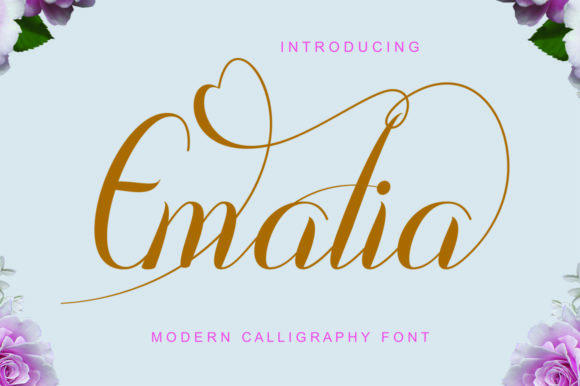
Emalia: A Script Font That Gives Your Small Business Brand a Personal Touch
When you run a small business, every piece of customer communication matters. Your logo, your product labels, your social media posts, and even your thank-you cards all send a message about who you are. As a business owner, I have learned that the right font can make the difference between blending in and being remembered. That is where Emalia comes in.
What Makes Emalia Stand Out
Emalia is a romantic script font that feels energetic without being overwhelming. It has a handcrafted quality that instantly makes any design feel more personal and inviting. Unlike many decorative scripts that are difficult to read or feel stiff, Emalia strikes a balance between elegance and approachability. It carries a sense of warmth and motion that works beautifully for brands that want to connect with customers on an emotional level.
The letters flow naturally, with graceful curves and a light, airy feel. This makes Emalia a strong choice for businesses in the creative, lifestyle, beauty, food, and hospitality spaces. If you run a boutique, a café, a handmade goods shop, or a coaching practice, this typeface can help you communicate your personality without saying a word.
Using Emalia in Real Business Materials
One of the first places I recommend using Emalia is in your logo. A script font like this can become the visual anchor of your entire brand. Because it carries a romantic and energetic mood, it works especially well for businesses that want to feel feminine, artistic, or nostalgic. For example, a bakery brand could use Emalia for its wordmark, pairing it with a clean sans serif font for taglines or secondary text. A handmade candle label could feature Emalia for the product name, with supporting information in a simple serif font.
Business cards are another natural fit. When someone picks up your card, the first thing they notice is the typography. Emalia used for your business name instantly signals creativity and care. Pair it with a minimal layout and a soft color palette, and you have a card that feels memorable and professional.
Packaging design is where Emalia really shines. Whether you design product labels for beauty products, coffee bags, or gift boxes, a script font adds a human touch. Customers often equate handwritten-style typefaces with authenticity and small-batch quality. If you sell handmade soap, for instance, Emalia on the label tells customers that your product is crafted with intention.
When to Use Emalia as a Headline or Display Font
Not every font works everywhere. Emalia is best used as a display font, meaning it should take center stage in headlines, logos, and accent text. It is not designed for long paragraphs of body copy. On a menu, you might use Emalia for the name of your café or for a featured dessert, and then switch to a readable sans serif font for the descriptions and prices. This creates visual hierarchy and makes your materials easy to scan.
On your website, Emalia can appear in banners, hero sections, and call-to-action headlines. It works well on Instagram posts, Pinterest graphics, and digital ads where you need to grab attention quickly. Just keep in mind that script fonts can be harder to read at very small sizes, so reserve Emalia for larger text where its details can be appreciated.
Readability in Real Settings
As a business owner, you need to think about where your customers will see your font. Emalia is legible at display sizes, but I always recommend testing it in your actual use cases. Print your product label at the actual size. Preview your social media graphic on a mobile screen. Look at your website banner on a phone. If the text becomes hard to read, adjust the size or spacing, or use Emalia only as an accent rather than the main information carrier.
For printed packaging, small labels, and business cards, test a physical sample before committing to a large print run. Emalia has a light and airy stroke, so on very small items like lip balm labels or tag tags, you may need to increase the font size or choose a bolder weight if available. Always prioritize readability so your customers can actually read your business name and product details.
Font Pairing Ideas for a Cohesive Brand
To make your brand look consistent and professional, pair Emalia with a complementary typeface. A clean sans serif font is often the safest choice. The contrast between the romantic script and a modern, minimal sans serif creates a balanced look that feels both creative and trustworthy. For example, use Emalia for your logo and a sans serif for your website body text, email newsletters, and product descriptions.
If you prefer a more classic feel, pair Emalia with a readable serif font. This combination works well for luxury brands, stationery shops, or businesses with a vintage or artisan identity. The serif adds structure and authority, while Emalia brings warmth and personality.
Avoid pairing Emalia with another decorative script font. Too many competing voices confuse the eye and weaken your brand identity. Stick to one expressive font and one neutral workhorse font for the best results.
Testing Emalia Before Full Brand Adoption
Before you apply Emalia across every customer-facing material, test it in a few places first. Create a single social media graphic with your logo and a promotional message. Design one product label and print it. Show it to a few trusted customers or friends and ask for honest feedback. Does it feel like your brand? Is it easy to recognize? Does it make you look more professional?
Testing allows you to adjust without wasting time or money. You might discover that Emalia works perfectly for your logo but needs a larger size on your packaging. Or you might find that a slightly tweaked letter spacing improves readability on your website. Small adjustments can make a big difference in how your brand is perceived.
Licensing and Commercial Use
This is a practical detail that many business owners overlook. Before you use Emalia on products, packaging, templates, merchandise, client work, or digital downloads, check the commercial font license. Some fonts require an extended license for certain uses, such as selling products with the font on the packaging or using it in logo designs for clients. Make sure you have the right to use the font in the way you intend. A quick check upfront can save you legal and financial headaches later.
Emalia for Different Business Types
Let me give you a few realistic examples. A handmade candle business could use Emalia for the brand name on the label, with product details in a clean sans serif. A wedding invitation designer could feature Emalia prominently on the main invitation and use a serif font for the details. A beauty product brand could place Emalia on the front of a serum box, creating an elegant and feminine impression. A coaching business could use Emalia in website banners and lead magnets to add a personal, approachable feel.
For a café menu, Emalia could highlight the name of a signature drink or a daily special. For a boutique online shop, Emalia could appear in the logo and on promotional banners, while product titles and descriptions stay in a neutral sans serif. The key is to let Emalia carry the emotional weight of your brand while keeping the functional text easy to read.
Building Trust Through Consistent Typography
When you use the same typeface across your logo, packaging, website, social media, and printed materials, your brand becomes more recognizable. Customers start to associate that visual style with your business. Emalia, with its romantic and energetic personality, can become a signature element that sets you apart from competitors who rely on generic fonts.
Consistency also builds trust. When everything looks cohesive, customers perceive your business as more professional and reliable. They are more likely to remember you and recommend you to others. A thoughtful typeface choice is not just about aesthetics—it is a business decision that affects how people perceive your value.
Emalia is a versatile and beautiful script font that can elevate your brand when used thoughtfully. Test it, pair it wisely, and apply it consistently across your customer-facing materials. Your business will look more polished, feel more personal, and stand out in a crowded market.